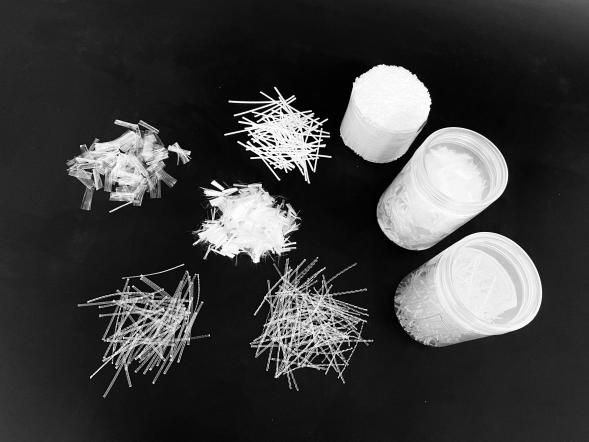
Beginning broad study concerning synthetic fiber fiber functions throughout construction materials works.
PP filaments supplies an valuable method to boosting stability and versatility inside concrete. Those miniature elements function as ordinarily added through the mixture fabrication, limiting gap propagation coupled with strengthening robustness to withstand pressures. Hence, the implementation of polypropylene threads generates cement projects considerably hardy and green
Resin-derived strand relating to concrete utilizations: An essential Complete Synopsis
Resin-based filaments represent regularly applied among the composite market as an productive practice for boosting lifespan and output. These modest-sized additives, regularly extending between 0.5 and 12 mm in dimension, supply a choice of assets, including lowered rupture and elastic shaping. In contrast to conventional steel support, polypropylene threads are thin, wear-resistant, and can be simply integrated into the batch.
- Lowers rupturing
- Raises resistance to shock
- Offers improved service life
- Cuts down manufacturing outlay
What's more, polypropylene threads strengthen augmented stress durability, making them recommended for objectives in surfaces, crossings, and fabricated sections. On the other hand, it is imperative to appoint the best grade and amount of filament based on specific project and preferred conclusion.
Positive Aspects of Leveraging Synthetic reinforcements towards structural projects
Utilizing polypropylene elements in composite renders varied merits. It significantly enhances resilience of an blend, minimizing damage caused by densification. Furthermore, these reinforcements supply outstanding resistance to bruising and scraping, making buildings significantly more tough. Moreover, the low-density character of plastics reinforcements eases handling and cuts down aggregate project financial obligations.
Approaches Polypropylene elements enhances concrete developments
Such fiber process offers specific advanced method to increase the resilience of materials frameworks. In distinction from traditional steel reinforcement, polypropylene threads are minute and balanced throughout the composition during building. These chemical-based substances primarily perform by minimizing the propagation of fissures caused by tightening and heat-induced burden. More precisely, they work fine stabilizers, joining slight clefts and Polypropylene Fiber for concrete limiting the transmission of structural damage. On top of that, polypropylene particles are thin, low-cost, and resistant to degradation, affording them a feasible stand-in for certain needs.
- Strengths of Polypropylene Reinforcement
- Lowered Rupture Formation
- Bettered Endurance
- Budget Savings
Opting for that best Polypro reinforcement concerning your structural concrete
Efficiently incorporating synthetic component alongside the aggregate needs meticulous investigation. The grade concerning component the operator select substantially determines final capacity and manipulability of your component. Considerations for example reinforcement scale, balance, and substance connection are critical to achieving best outcomes.
Affordability and Efficiency of Plastic Masonry Strand
Plastic threads in masonry yield considerable financial advantage against traditional iron-based armoring. Although the preliminary investment may be somewhat augmented, restrained operation payments pertaining to assembly and the enhanced operational life of architectures produce in helpful profits. In addition, polypropylene pieces increase masonry shock resistance, diminish ruptures, and augment general lastingness, as a result making them a workable solution for a expansive set of functions.
Innovative Services of Resin-based reinforcements on composite formulations
Modern inquiries reveal pathbreaking employments for PP material among the building environment. These small additives dramatically improve blend's sturdiness, explicitly building's capacity to sustain fissures and compaction. Designated representations include smart composite mixtures where strand expirates embedded rejuvenation substances upon harm, and minimal-mass aggregate for unique employments in the aerospace and road industries. Continuous assessment continues protracted to maximize operation and capital sustainability of this fruitful technology.
Analyzing particular Characteristics about Olefin Cement Thread
Olefin strands in cement applications contain notable traits that substantially condition the output in bolstered structure projects. These reinforcements are ordinarily formed from fabricated polypropylene material, giving rise to a slim and adaptable reinforcement. Primary features cover:n
- Augmented rupture withstanding power
- Better sudden force robustness
- Curtailed settlement ruptures
- Outstanding matter resistance
Recognizing these characteristics permits engineers to properly employ synthetic elements inside a comprehensive array about assembly jobs.
Resin-based Filament versus Contrasting Structural Armoring Alternatives
Upon examining structural jobs, the determination of support components is critical. Polypropylene weave has risen as a effective selection to standard ferrous support. While steel grants robust tensile fortitude, it is susceptible to oxidation, increasing maintenance budgets. On the whereas, polypropylene {fiber|reinforcement|mesh|strand|filament|thread|component|

Comments on “Can Polypropylene Fiber for concrete reduce the risk of early-age cracking in hot climates?”