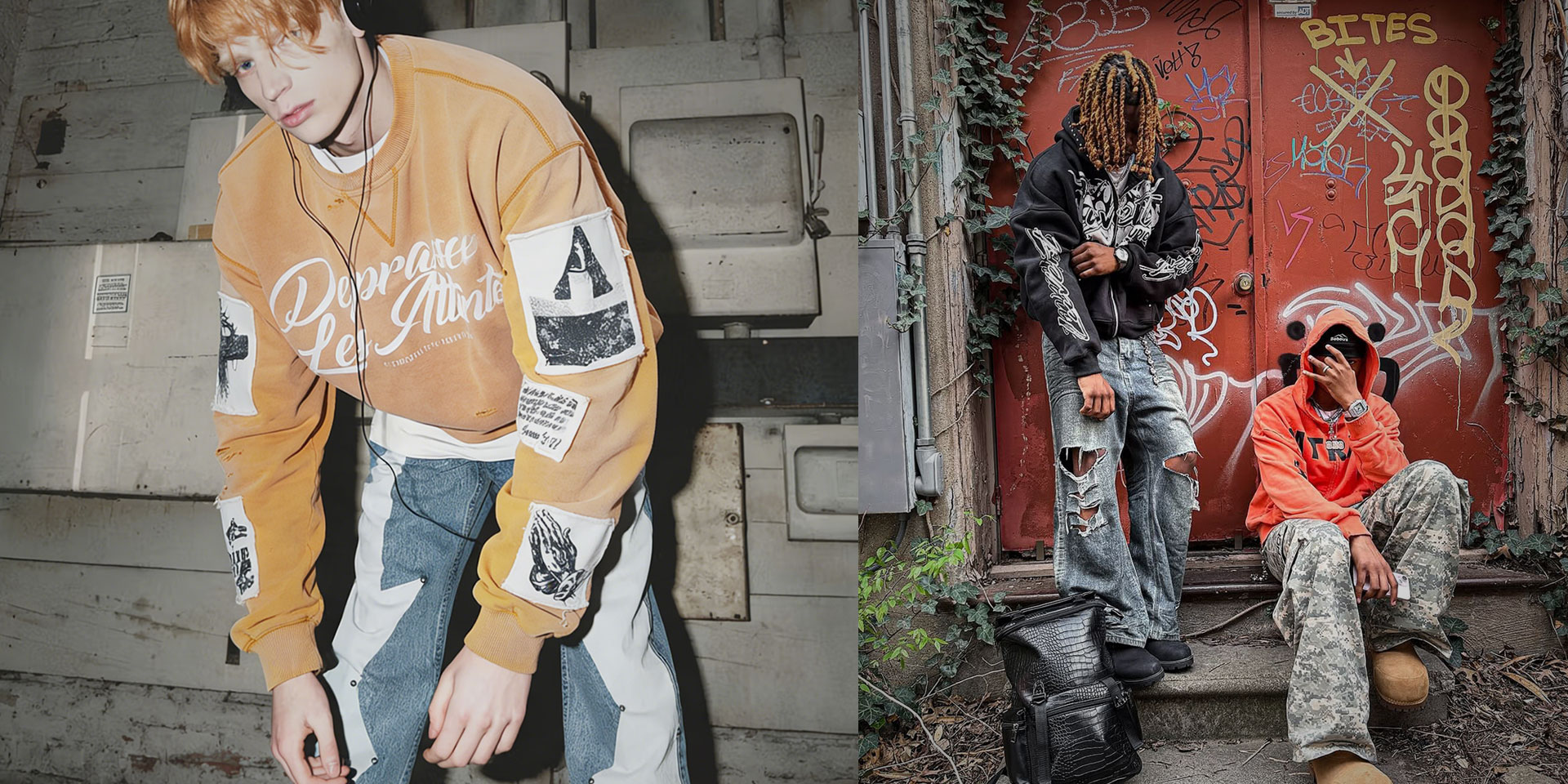
Your Next Drop Deserves Better Than a Guessed Wash: Acid Wash, Pigment Wash, Enzyme Wash, and Distressing on Shirts — What Actually Separates Them
Many brand teams find out too late that a wash technique that looks incredible on a single sample can completely destroy the fabric integrity or fit when scaled to bulk production. On paper, a factory may look capable of executing complex finishes, but what sounds like a simple sourcing question — "Can you do an acid wash?" — often turns into a nightmare of inconsistent shrinkage, uneven color distribution, and compromised silhouettes. The reality is that modern streetwear is no longer just about slapping a bold graphic on a basic tee; it is about the tactile experience, the visual age of the garment, and the structural balance that only precise finishing techniques can achieve.
As the market shifts, established streetwear brands are moving away from basic apparel categories and demanding more from their production partners. Consumers are hyper-aware of visual identity, fabric feel, and wash texture. They can tell the difference between a cheap, superficial fade and a deeply integrated, culture-driven wash. This means that procurement teams and creative directors can no longer rely on general apparel manufacturers who treat washes as an afterthought. Understanding the exact differences between acid wash, pigment wash, enzyme wash, and distressing is not just a design choice — it is a critical supply chain decision that affects sample-to-bulk consistency, fabric sourcing quality, and long-term scalability.
How Does Acid Wash Actually Alter the Fabric and Visual Identity?
Quick Answer: Acid wash is a chemical process using pumice stones soaked in bleach to strip the top layer of dye, creating a high-contrast, mottled, and heavily textured appearance. It fundamentally alters the fabric's visual age and requires precise control to prevent excessive weakening of the cotton fibers.
The difficulty with acid wash lies in its inherent unpredictability. When independent brands with real traction develop an acid wash hoodie or tee, they are not just looking for a random pattern; they are looking for a specific, repeatable aesthetic that aligns with their brand identity. The process involves tumbling the garments with bleach-soaked stones, which aggressively attacks the dye. This creates the signature high-contrast, almost marbled look that has become a staple in vintage-inspired and grunge-leaning streetwear collections.
However, the production reality is far more complex than the concept. Acid wash significantly impacts the fabric's structural integrity. If a manufacturer does not carefully calibrate the bleach concentration, the tumbling time, and the neutralization process, the fabric can become brittle, leading to premature tearing or severe shrinkage. This is why selecting a specialized custom streetwear clothing manufacturer is crucial. A general factory might produce a great sample, but during bulk cutting and finishing, the lack of standardized QC processes can result in a batch where some shirts look barely touched while others are practically white and structurally compromised.
For procurement teams, the decision gate here is verifying the manufacturer's ability to maintain sample-to-bulk consistency. You must ask: How do they control the stone-to-garment ratio in large industrial washers? How do they account for the specific heavyweight cotton or French Terry being used, since different weights and weaves react differently to the chemical stripping? Acid wash is not just a surface treatment; it is a structural intervention that demands a production partner who understands both the chemistry and the culture of streetwear.
Why Do Brands Choose Pigment Wash for a Vintage, Lived-In Feel?
Quick Answer: Pigment wash involves applying an insoluble pigment to the surface of the garment, which then gradually fades and softens over time and subsequent washes. It provides a dusty, muted, and authentic vintage look that evolves with the wearer, unlike traditional reactive dyes that penetrate the fibers deeply.
Pigment washing is the secret behind that perfectly faded, "I've owned this shirt for ten years" aesthetic that dominates premium streetwear. Unlike standard dyeing processes where the color chemically bonds with the cotton fibers, pigment dye sits on the surface. When the garment is subsequently washed — often with enzymes or light stones — the pigment begins to chip away at the seams, collars, and high-friction areas, creating a natural, uneven fade.
This technique is highly favored by streetwear brands with proven sales because it offers a unique visual depth that cannot be replicated by digital printing or standard piece-dyeing. The color appears slightly chalky or dusty, which pairs exceptionally well with heavyweight fabrics and oversized silhouettes. However, the challenge for sourcing teams is managing the colorfastness and the initial crocking (color transfer). If the curing and washing processes are not expertly handled, the pigment can bleed onto other garments or the wearer's skin during the first few washes.
Furthermore, pigment washing requires a deep understanding of how the garment is constructed. The way the dye settles into the seams and ribs dictates the final look. A specialized streetwear manufacturer will know how to adjust the pattern development and sewing tension to maximize the visual impact of the pigment wash. They understand that the goal is not a uniform color, but a controlled, intentional inconsistency that adds character to the piece. When evaluating a production partner, brands must ensure the factory has the technical capability to balance the desired vintage fade with acceptable commercial colorfastness standards — because a beautiful sample that bleeds onto the customer's white shirt is a PR disaster waiting to happen.
What Makes Enzyme Wash the Standard for Premium Handfeel?
Quick Answer: Enzyme wash uses organic enzymes (like cellulase) to break down the surface cellulose fibers of cotton, resulting in an incredibly soft, smooth handfeel and a subtle, refined drape without the harsh physical abrasion of stone washing.
While acid and pigment washes are primarily visual treatments, enzyme washing is fundamentally about the tactile experience. In the premium streetwear segment, the handfeel of a heavyweight tee or a dense fleece hoodie is just as important as the graphic placement. Consumers expect a garment that feels luxurious and broken-in from the moment they put it on. Enzyme washing achieves this by using naturally occurring proteins that literally break down the loose, protruding fibers on the surface of the fabric, leaving behind a surface that feels impossibly smooth.
This process not only softens the material but also cleans up the fabric face, reducing pilling and providing a smoother canvas for complex printing techniques like DTG or high-density screen print. Because it relies on a biochemical reaction rather than physical abrasion (like pumice stones), enzyme washing is much gentler on the garment's structure. This makes it an ideal choice for maintaining the integrity of complex cut-and-sew panels or delicate embroidery that might be damaged by harsher wash methods.
For product development teams, the critical factor is the timing and temperature control during the wash cycle. The enzymes are highly sensitive to environmental conditions; if the bath is too hot or the cycle runs too long, the fabric can lose too much weight and strength. Conversely, if the process is cut short, the desired softness won't be achieved. This is where the expertise of a dedicated streetwear manufacturing partner becomes evident. They don't just follow a tech pack blindly; they test the specific fabric weight and composition to determine the exact enzyme formulation needed to achieve the brand's intended drape and feel, ensuring that the oversized or boxy fit sits perfectly on the body rather than collapsing into a shapeless mass.
How Does Distressing Elevate the Structural Narrative of a Garment?
Quick Answer: Distressing is the intentional, physical manipulation of a garment — through grinding, cutting, fraying, or laser application — to create localized wear and tear. It adds a raw, deconstructed aesthetic that requires precise execution to ensure the garment remains wearable and structurally sound.
Distressing is perhaps the most direct way a brand can inject a raw, rebellious narrative into its product line. Whether it is a subtly frayed collar on a vintage-inspired tee or heavily destroyed hems on a heavyweight hoodie, distressing moves the garment from a pristine manufactured object to a piece with perceived history and attitude. However, it is also one of the most difficult techniques to scale consistently, and that gap between sample and bulk is where most brands get burned.
The primary challenge with distressing is that it is often a manual, labor-intensive process. While laser technology is increasingly used for precision, many premium streetwear brands still prefer the organic look of hand-grinding using Dremel tools or sandpaper. This introduces a massive variable in bulk production. A sample might feature perfectly placed abrasions that enhance the silhouette, but if the factory workers on the bulk line do not understand the aesthetic intent, the distressing can look artificial, symmetrical, or simply sloppy.
Moreover, distressing inherently weakens the garment. If a cut is made too deep or a seam is ground down too far, the piece will fall apart after a few washes, leading to unacceptable return rates. A competent streetwear factory will reinforce distressed areas — often with hidden stitching or backing fabrics — to ensure the garment maintains its structural integrity while looking destroyed. They understand that distressing is not just about damaging the clothes; it is about controlled deconstruction. When reviewing a manufacturer's capabilities, procurement teams must look beyond the sample and investigate their standard operating procedures for executing and QC-ing manual distressing across hundreds or thousands of units.
Why Do These Techniques Require a Specialized Streetwear Manufacturer?
Quick Answer: General apparel factories often lack the cultural understanding and technical precision required to execute complex washes and distressing consistently. Specialized streetwear manufacturers integrate these finishing techniques into the pattern development and fabric sourcing stages, ensuring the final silhouette and aesthetic align with the brand's vision.
The intersection of streetwear culture and manufacturing reality is where many brands stumble. A factory that excels at producing basic corporate uniforms or fast-fashion basics will almost certainly fail when tasked with a heavy enzyme wash on a 400gsm custom-milled fleece. They view washes as a final step, a simple add-on. In contrast, a specialized custom streetwear clothing manufacturer understands that the wash dictates the entire development process — from fabric selection to pattern grading to the sequence of operations on the production floor.
For instance, all wash techniques cause some degree of shrinkage. A factory experienced in streetwear will calculate the specific shrinkage rate of the chosen fabric under a particular wash (e.g., a heavy acid wash vs. a light enzyme wash) and adjust the initial pattern accordingly. If a brand wants an exaggerated, oversized fit, the pre-wash pattern must be significantly larger to account for the fabric contraction. General factories often miss this crucial step, resulting in bulk orders that are two sizes too small and a collection that cannot ship on time.
Furthermore, the sequence of operations is critical. Should the garment be printed before or after the pigment wash? If you screen print before an acid wash, the chemicals will likely destroy the graphic. If you embroider after distressing, the needle might catch on the frayed edges. These are the types of production risks that a dedicated partner will flag during the tech pack review, long before a single unit is cut. Some manufacturers, such as Groovecolor, focus specifically on heavyweight fabrics and complex finishing techniques used in modern streetwear collections, ensuring that the cultural intent of the design is translated accurately into the final manufactured product.
How Do Different Washes Affect Fabric Weight and Silhouette?
Quick Answer: Wash techniques like acid and enzyme washing physically remove material from the garment, altering its final weight and drape. A 400gsm hoodie might lose up to 10% of its weight after a heavy wash, fundamentally changing how the silhouette sits on the body.
One of the most overlooked aspects of complex finishing is its impact on the physical properties of the fabric. When a brand specifies a heavyweight cotton or a dense French Terry, they are usually aiming for a specific structural feel — a boxy tee that holds its shape or a hoodie with a rigid, exaggerated hood. However, the very processes used to give these garments their visual character can undermine that structural intent if not carefully managed.
Acid washing is highly abrasive. The combination of bleach and pumice stones not only strips the dye but also breaks down the cotton fibers. A garment that starts as a stiff, 300gsm tee might emerge from the wash feeling significantly lighter and softer, losing the crisp drape the designer originally envisioned. Similarly, enzyme washing, while gentler, still digests the surface cellulose, which can subtly alter the fabric's density and how it falls over the shoulders.
This is why the relationship between fabric sourcing and finishing techniques is so critical. A specialized streetwear manufacturer will not just source the requested fabric weight; they will source a fabric that finishes at the requested weight. If the goal is a 400gsm washed hoodie, the factory might need to start with a 440gsm raw fleece to account for the material lost during the wash cycle. They will also adjust the pattern to ensure the oversized or cropped silhouette remains balanced after the inevitable shrinkage. For procurement teams, this means moving beyond simple tech pack execution and asking your production partner how they calculate weight loss and shrinkage for specific wash techniques.
What Should Procurement Teams Verify Before Committing to Bulk Production?
Quick Answer: Procurement teams must demand comprehensive wash testing, verify shrinkage tolerances, and establish clear, physical boundary samples (both acceptable and unacceptable variations) to ensure the manufacturer can maintain sample-to-bulk consistency across complex finishing techniques.
When moving from a successful sample to bulk production, the risk profile changes entirely. The question is no longer "Can they do it?" but "Can they do it exactly the same way 1,000 times?" For brands with validated market demand, a failed bulk order due to inconsistent washing or poorly executed distressing is not just a financial loss; it is a massive disruption to their release schedule and brand reputation.
To mitigate these risks, procurement teams must implement rigorous pre-production protocols. First, demand a full size run of pre-production (PP) samples that have undergone the exact bulk wash process. A single sample washed in a small sample machine will look different than a batch washed in a 500-pound industrial tumbler. Second, establish physical boundary samples. Because techniques like acid wash and pigment dye are inherently variable, you must agree with the factory on what constitutes an acceptable range of variation. Provide a "lightest acceptable" and "darkest acceptable" reference garment.
Finally, scrutinize the factory's internal QC processes. How do they handle garments that fall outside the acceptable wash range? Do they have the capability to over-dye or re-wash, or are those units simply discarded? Understanding these operational realities separates a strategic sourcing decision from a blind gamble. For brands comparing specialized production options, a recent industry breakdown of streetwear apparel factories in China provides a useful reference point for evaluating which manufacturers have the infrastructure to handle technique-intensive categories like washed and distressed garments. By partnering with a manufacturer who treats complex washes and distressing as engineered processes rather than artistic accidents, established streetwear brands can protect their visual identity and scale their production with confidence.
What Are the Hidden Costs of Poorly Executed Washes and Distressing?
Quick Answer: Poorly executed finishes lead to hidden costs such as high return rates due to structural failure, delayed release schedules from rejected bulk orders, and long-term damage to brand reputation when consumers receive inconsistent products.
When evaluating manufacturing partners, procurement teams often focus heavily on the unit cost. A factory offering a significantly lower price for an acid wash hoodie might seem like a great deal on paper. However, in the realm of premium streetwear, cheap execution usually carries massive hidden costs that only become apparent after the bulk order is delivered and the damage is already done.
The most immediate hidden cost is structural failure. If an acid wash is too aggressive or a distressing cut is too deep, the garment will fall apart after a few wears. This leads to a spike in customer returns, negative reviews, and a direct hit to the brand's bottom line. A specialized streetwear manufacturer understands how to balance the visual impact of a wash with the structural integrity of the fabric, often reinforcing distressed areas or adjusting the chemical concentration to prevent premature degradation.
Another significant hidden cost is the disruption of release schedules. Streetwear brands rely heavily on coordinated drops and seasonal launches. If a bulk order arrives with inconsistent pigment washing or sloppy distressing, the brand is forced to either reject the shipment — causing massive delays — or sell a substandard product, damaging their reputation. The cost of a delayed drop or a compromised brand image far outweighs the initial savings of a cheaper unit price. Ultimately, the value of a premium production partner lies in their ability to mitigate these risks: the technical expertise, the standardized processes, and the rigorous QC necessary to ensure that every garment in a bulk order meets the brand's exact specifications.
Closing Thoughts: The Wash Is Never Just the Wash
As the streetwear market continues to mature, the demands placed on manufacturing partners will only increase. Consumers are becoming more sophisticated, and their expectations for fabric quality, wash texture, and structural integrity are higher than ever. Brands can no longer rely on general apparel factories to execute the complex finishes that define modern streetwear.
The future of streetwear manufacturing belongs to specialized partners who integrate technical precision with cultural understanding. They are the factories that treat acid washing, pigment dyeing, enzyme washing, and distressing not as simple surface treatments, but as engineered processes that require rigorous testing, standardized execution, and uncompromising quality control.
For established streetwear brands and procurement teams, the challenge is to look beyond the sample and evaluate the manufacturer's ability to deliver sample-to-bulk consistency. By asking the right questions, demanding transparency, and prioritizing technical capability over initial unit cost, brands can build the resilient, scalable supply chains necessary to thrive in an increasingly competitive market.
Comments on “Why the Right Baggy Fit Can Make or Break Your Graphic Sweatpants Program”